Malta Digital Skills and Jobs Platform (LISP)

Curriculum and Assessment Review Final Report

Curriculum and Assessment Review Final Report

The conclusions and recommendations of the independent review of the curriculum, assessment and qualifications system in England.   The importance […]
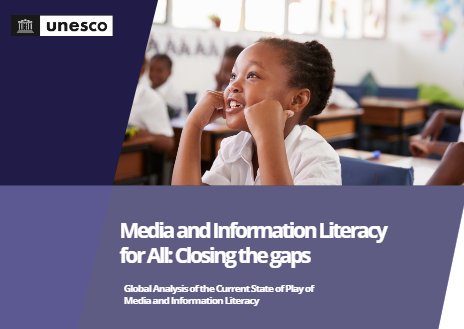
Media and Information Literacy for all

Media and information literacy for all: closing the gaps: global analysis of the current state of play of media and information literacy

UNESCO’s 2025 report Media and Information Literacy for All: Closing the Gaps offers the first comprehensive global overview of how […]
Emphatic Active listening

Empathic Active Listening: A Guide for Nurturing Relationships in the Digital Age and Beyond

Welcome to our e-counselling center’s methodology guide on Empathic Active Listening. This guide is crafted to empower parents, teachers, and […]
Work, workforce, workers

Work, workforce, workers

Generative AI has burst onto the scene. It appeared fast and is evolving even faster. To date, our teams have […]
Digital skills in Europe - A methodological and empirical assessment

Digital skills in Europe – A methodological and empirical assessment

The European Commission’s working paper Digital skills in Europe: a methodological and empirical assessment (2025) examines how digitalisation is transforming […]
Work in the Digital Era

Work in the Digital Era: How Technology is Transforming Work and Occupations

The report Work in the Digital Era: How Technology is Transforming Work and Occupations, published by the European Commission’s Joint […]
The European Media Industry Outlook

The 2025 European Media Industry Outlook report

The European Media Industry Outlook 2025, published by the European Commission, highlights how Europe’s media landscape is undergoing profound transformation, […]
Empowering Learners for the Age of AI

Empowering Learners for the Age of AI

Artificial Intelligence (AI) has become a widely used tool in our everyday life, including for learning, personalised assistance, and entertainment. Therefore, young people must be able to understand how AI works, its societal impact, and how to use it ethically in order to be prepared for a society and economy in the age of AI.
Skills Intelligence Publication

OECD Employment Outlook 2025

The “OECD Employment Outlook 2025” shows that labour markets remain fairly strong, with high employment rates and low unemployment, although […]
Skills Intelligence Publication

Explainable AI in Education: Fostering Oversight and Shared Responsibility

This report emphasizes the vital role of Explainable AI (XAI) in education, focusing on how it can support the development […]
Skip to content