-
Image
-
Publish in core platform
Yes
-
Link Type
Organization url
-
Digital technology / specialisation
Digital skillsDigital skill level
Basic Intermediate AdvancedGeographic Scope - Country
Non-EU MaltaType of initiative
Local initiative

Malta Digital Skills and Jobs Platform (LISP)

Abstract
Eighteen months after Andrej Karpathy coined the term “vibe coding,” the concept has already evolved into something more demanding and more professionally significant. Agentic engineering — directing AI agents to build software under structured human oversight — is becoming the default workflow for professional software development, while the casual, unreviewed form of vibe coding that first attracted attention is increasingly understood as appropriate only for prototypes. This article examines what that transition means for the skills valued in the labour market, why the shift from writing code to orchestrating and evaluating AI output requires capabilities that go beyond technical programming, and what it means for the broader digital skills agenda in Malta and across Europe.
Introduction
It is rare for a concept to move from coinage to obsolescence in under two years. Vibe coding has managed something close to it — not disappearing, but being formally superseded by its own inventor within twelve months of going mainstream.
On February 4, 2026, Andrej Karpathy posted a thread on X that reshuffled the vocabulary of an entire industry. One year earlier, he had tossed off what he later called a “shower thoughts throwaway tweet” — coining “vibe coding.” That phrase spread through Slack channels, conference keynotes, and VC pitch decks the world over.
In his one-year retrospective, Karpathy admitted the term went viral because it captured the excitement of the moment. But he was clear: while professional workflows now default to using LLM agents, they must be paired with significantly higher oversight and scrutiny. His preferred term for this evolution: “agentic engineering.”
The distinction is not merely semantic. It has direct implications for what skills employers are now looking for, what training programmes should develop, and what it means to be a digitally competent professional in an economy where AI-generated code is becoming ubiquitous.
Why Vibe Coding Alone Was Not Enough
The limitations of casual, unreviewed vibe coding became apparent during 2025 as organisations moved AI-generated prototypes into production and discovered that the tools optimise for functionality, not for the operational requirements of real systems.
Vibe coding fails when code moves from prototype to production. The technique skips design, skips review, and skips testing — which works for demos but collapses under the weight of real users, real security requirements, and real scale. The pattern repeated throughout 2025: it demos great, then reality arrives.
Amazon ordered a 90-day reset on its code deployment controls after a string of incidents in 2025, at least one tied to Amazon’s own AI coding assistant. Dave Treadwell, Amazon’s SVP of e-commerce services, described “high blast radius changes” in an internal document — software updates that propagated broadly because control planes lacked safeguards. Vibe coding alone did not cause the problem. Rather, the incidents reflected a broader challenge: productivity gains from AI-assisted development need to be matched by appropriate oversight, review discipline and operational safeguards.
The quality data reinforced the operational experience. CodeRabbit’s analysis of public pull requests reported that AI-coauthored code contributions ship roughly 2.74 times more security vulnerabilities than human-authored contributions at the same review depth. Speed without review discipline is not a productivity gain. It is a liability accumulation mechanism.
What Agentic Engineering Actually Requires
Agentic engineering is the practice of using AI-powered coding agents as force multipliers under your direction, while you retain full responsibility for architecture, code quality, and engineering judgment. It means using tools like Claude Code, OpenAI’s Codex, or GitHub Copilot to handle the monotonous and tedious parts of work — the work that, if you could take it off your plate, would let you deliver more value. These tools do not replace your judgment. They extend its reach.
The shift in what engineers spend their time doing is fundamental. Even Andrej Karpathy, who coined the term vibe coding, said a year later that this era is ending: “Today, programming via LLM agents is increasingly becoming a default workflow for professionals, except with more oversight and scrutiny. The goal is to claim the leverage from the use of agents but without any compromise on the quality of the software.”
The key insight is that agentic engineering does not remove the need for engineering skill — it redirects it. Instead of writing code, you design the systems, constraints, and feedback loops that enable AI to write code reliably. Writing clear, precise specifications — defining what a system should do, under what constraints, with what inputs, outputs, and failure modes — is the most critical planning competence in agentic engineering. Evaluating whether AI output actually meets those specifications is the most critical review competence. Neither requires knowing how to write the code manually. Both require understanding what good software should do and being able to tell the difference between code that achieves it and code that does not.
The Labour Market Signal
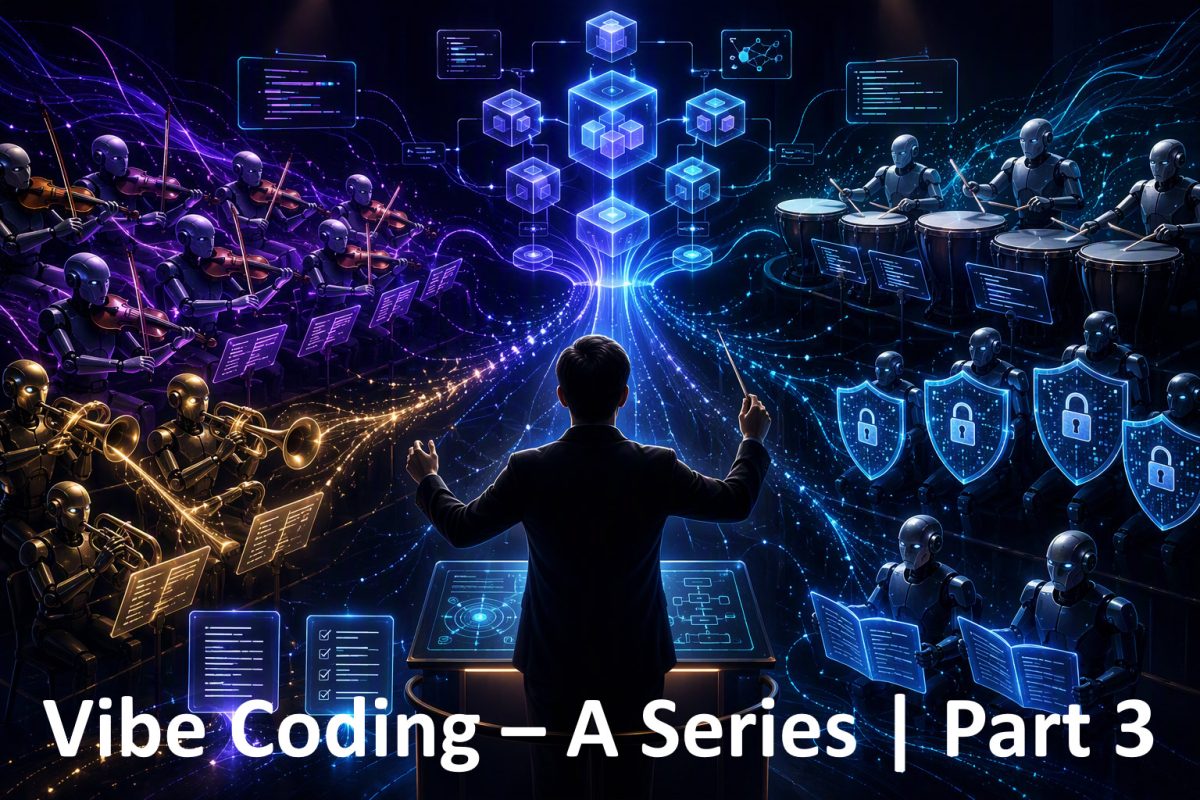
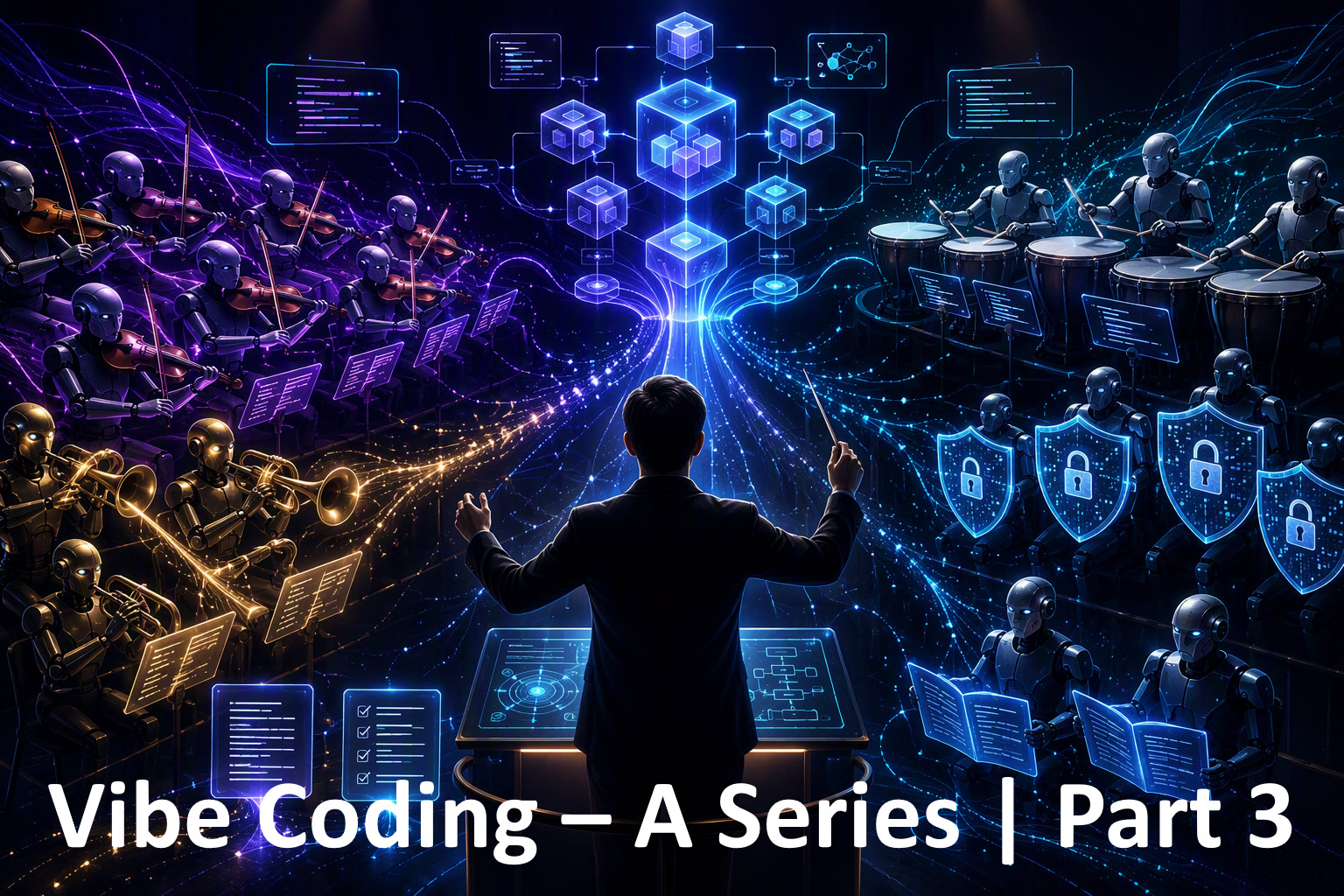
The labour market has been registering this shift for several months. Employers are increasingly seeking experience with AI-assisted or agentic workflows, code review and AI system orchestration. Anthropic launched the Anthropic Certified Architect programme in March 2026. Gartner projects 40% of enterprise applications will integrate task-specific AI agents by end of 2026, up from under 5% in early 2025. Forrester describes the shift as engineers becoming “AI Conductors,” focused on workflow orchestration and architectural validation.
The credential market is following the same signal. Structured training programmes focused specifically on agentic engineering workflows — writing specifications, orchestrating agents, reviewing AI output — have emerged as a distinct training category separate from conventional programming instruction. The skill being certified is not the ability to write code. It is the ability to direct AI systems that write code, evaluate their output, and take responsibility for what ships.
The Non-Technical Dimension
Nielsen Norman Group research has documented non-developers building complex agentic AI systems on intuition developed through many hours of experimentation, YouTube videos, and community forums. Generative AI lets people’s technical capability outpace their technical knowledge in ways that no previous technology has enabled before.
These people were applying vibe coding to design how information flows across systems, how AI agents coordinate, and how work gets done — sometimes for entire teams. As they build increasingly complex systems, they are not learning about the technical functionality under the hood. Instead they are developing something more amorphous — a semi-instinctual set of behaviours, preferences, and tendencies, shaped by hours spent experimenting.
The implication for digital skills policy is important: the skills that make someone effective in an agentic engineering context are not reliably developed through conventional digital skills training, which tends to emphasise tool familiarity over systems thinking. Developing the capacity to specify clearly, evaluate critically, and maintain accountability over AI-generated outputs is a different kind of competence development — closer to professional judgment than to technical training.
What This Means for Malta
Malta’s economy is already characterised by high enterprise demand for digital and ICT capability. The National Digital Decade Strategic Roadmap 2023–2030, published by the Government of Malta, identifies persistent shortages of specialised ICT talent and highlights skills gaps affecting Malta’s digital economy. These gaps create particular pressure to find ways of extending the productive capacity of the existing workforce without rapid, proportional increases in the supply of formally trained ICT professionals – a supply constraint that educational policy alone cannot correct quickly enough to meet present demand.
Agentic engineering, properly understood and properly governed, is one mechanism for addressing that gap — enabling professionals without formal programming training to build and maintain software tools for their own domains, under appropriate oversight. The risk is that enthusiasm for the productivity gains of AI-assisted development outpaces the governance infrastructure needed to manage its security and quality implications, a pattern examined in detail in the second article of this series.
The opportunity — for individuals, for organisations, and for Malta’s digital skills ecosystem — is in developing the competences that sit at that gap: clear specification, critical evaluation, and informed accountability for AI-generated outputs. Those are the skills that make the difference between vibe coding that creates liability and agentic engineering that creates value.
References
- The New Stack, Vibe Coding Is Passé. Karpathy Has a New Name for the Future of Software, February 2026. https://thenewstack.io/vibe-coding-is-passe/
- Turing College, Agentic Engineering vs. Vibe Coding, 2026. https://www.turingcollege.com/blog/agentic-engineering-vs-vibe-coding
- NxCode, Agentic Engineering: The Complete Guide to AI-First Software Development Beyond Vibe Coding, March 2026. https://www.nxcode.io/resources/news/agentic-engineering-complete-guide-vibe-coding-ai-agents-2026
- DEV Community / Jason Guo, From Vibe Coding to Agentic Engineering, February 2026. https://dev.to/jasonguo/from-vibe-coding-to-agentic-engineering-when-coding-becomes-orchestrating-agents-1b0n
- Towards Data Science, From Vibe Coding to Spec-Driven Development, May 2026. https://towardsdatascience.com/from-vibe-coding-to-spec-driven-development/
- Voitanos, My Thoughts on Vibe Coding vs. Agentic Engineering, May 2026. https://www.voitanos.io/blog/vibe-coding-vs-agentic-engineering/
- Nielsen Norman Group, Vibe Architects: Agentic Vibe Coders, June 2026. https://www.nngroup.com/articles/vibe-architects/
- Shane Drumm, Vibe Coding AI Agents for Non-Techies, April 2026. https://shanedrumm.com/vibe-coding-ai-agents/
- Keyhole Software, Vibe Coding Trends 2026: Adoption, Productivity, and Code Quality Data, June 2026. https://keyholesoftware.com/vibe-coding-trends-2026/
- Vibecademy, Learn Vibe Coding in 2026: The Complete Guide, May 2026. https://www.vibecademy.ai/blog/learn-vibe-coding-2026
- CodeRabbit, A Semantic History: How the Term Vibe Coding Went from a Tweet to Prod, March 2026. https://www.coderabbit.ai/blog/a-semantic-history-how-the-term-vibe-coding-went-from-a-tweet-to-prod
- Plausible Futures, Vibe Coding in 2025: A Guide to AI-Augmented Development Workflows, December 2025. https://plausiblefutures.substack.com/p/vibe-coding-in-2025-a-technical-guide
- Government of Malta, National Digital Decade Strategic Roadmap 2023–2030, 2023. https://economy.gov.mt/wp-content/uploads/2024/08/Digital-Decade-Strategic-Roadmap-2023-2030.pdf
This article is based on information gathered from various online sources and intended only for informational purposes. It does not constitute professional advice or recommendations. While the information provided is accurate and true to the best of our knowledge, we make no representations or warranties of any kind, express or implied, regarding the completeness, accuracy, reliability, suitability, or availability of the topics covered. We strongly advise readers to conduct further research and consult appropriate professionals or experts before making any decisions based on the information presented in this article.
We disclaim any liability for losses or damages incurred based on the information provided herein.
This document was prepared with the assistance of generative AI tools for editorial support and image generation. Any AI-generated suggestions were reviewed, edited, and validated by the authors, who remain fully responsible for the final content.