-
Image
-
Publish in core platform
Yes
-
Link Type
Organization url
-
Digital technology / specialisation
Artificial IntelligenceDigital skill level
Basic Intermediate AdvancedGeographic Scope - Country
MaltaType of initiative
Local initiative
 Experts call for a new approach to Neuro-AI governance October 27, 2026
 A Leadership Reskilling Lens for the Age of AI (deep-dive) October 26, 2026

 Minecraft Education Challenge October 5, 2026

Malta Digital Skills and Jobs Platform (LISP)

Introduction
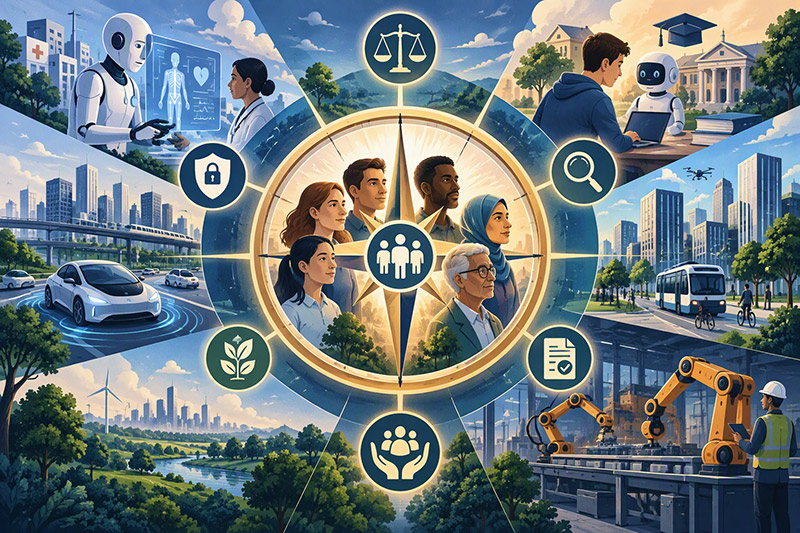
Generative AI has been a major topic in the tech world ever since its inception. Most often, when one imagines what AI model development looks like, the first thing that comes to mind is programmers designing architectures, providing data, or using algorithms; but people tend to forget that many other roles go into creating and upholding this technology. The term AI Ethics Specialist broadly encompasses several positions that ensure artificial intelligence systems are built, tested, and used fairly. Let’s imagine a scenario in which AI technology is challenged with an ethical dilemma: An AI-controlled vehicle malfunctions and is about to crash; it must make a split-second decision as to whether it should risk colliding with a car that is carrying four passengers, a motorcycle with two passengers, or a wall, risking the lives of the passengers within the vehicle. This scenario would require complex thinking and the weighing of risks. Other (less dramatic) ethical dilemmas include issues such as privacy, transparency, accountability, and fairness. These issues could manifest in a variety of circumstances; as such, this new profession is of the utmost importance, especially when considering how much AI is growing in significance in our day-to-day lives.
Tasks
Tasks that AI ethics specialists are responsible for include monitoring and evaluating ethical risks in AI systems, creating ethical guidelines for AI development as well as use, and ensuring that they align with fairness, transparency, and accountability standards. Moreover, other tasks include reviewing algorithms for bias, privacy, and societal impact, as well as educating teams on responsible AI practices. Of course, communication skills are an essential requirement for this occupation, as collaborating with data scientists, engineers, and legal teams is another obligation for these competences.
What does it take to become an AI Ethics Specialist?
There aren’t any particular educational requirements for this position. Bachelor’s or master’s degrees in ethics, law, computer science, philosophy, or a related field are generally sufficient under most job listings. However, it should be noted that the position does require sufficient understanding of and experience in AI, data governance, and tech policy. Moreover, there is now a European competence framework specifically for professional AI ethicists: EN 18274:2026, developed through CEN/CLC JTC 21. This framework defines what a professional AI ethicist should know, be able to do, and demonstrate through their professional conduct. It also deliberately doesn’t prescribe proficiency levels for every competence, as the framework recognises AI ethics as a field that combines technology, ethics, law, governance, and social considerations. This means professionals can enter the field from different educational and professional backgrounds. AI ethicists can be involved throughout an AI system’s lifecycle, from its initial design through development, deployment, and monitoring. Their role is therefore not limited to reviewing an AI system after it has been created. The competencies described by the framework can appear across different roles, including AI Ethics Officer, AI Ethics Consultant, Ethical AI Strategist, AI Ethics Researcher, and Responsible AI Specialist. This supports the idea that “AI ethics specialist” is better understood as a broad professional area than one narrowly defined job. EN 18274 is a European standard, not an EU law. It does not require companies to employ AI ethicists; instead, it provides a common framework for defining and developing the profession.
Other legislation
It should be noted that although the EU AI Act supports the objective of promoting the European human-centric approach to AI and being a global leader in the development of secure, trustworthy and ethical AI, and ensures the protection of ethical principles, there is no direct obligation to appoint an “AI Ethics Officer” or any other similar position; even despite its requirements concerning AI literacy, risk management, human oversight, documentation, monitoring, and, in certain instances, fundamental-rights impact assessments. The precise legal responsibility remains with the providers, deployers, and other actors identified by the Act, though the work created by the obligations certainly includes tasks to which AI ethics specialists could contribute.
Proper implementation
AI ethics specialists require sufficient independence and access to decision-makers for their recommendations to have a meaningful effect. Without proper authority and escalation procedures, the position is at risk of becoming a form of “ethics washing” used only to improve an organisation’s public image. Additionally, there are also problems and obligations post-implementation. An AI model may behave differently once introduced into the real world. Data distributions can change, and new forms of misuse may emerge. AI ethics specialists may therefore monitor complaints, incidents, performance differences between different groups, and unexpected consequences after deployment.
Conclusion
It seems that every day we are met with more AI content and features both online and in real life. A lot of household objects, as well as large scale machinery and data systems are increasingly implementing AI functionalities. As such the job of AI ethics specialists is no longer as theoretical as it was before. It is essential now more than ever that the qualities of fairness, transparency and accountability are properly accounted for in the day-to-day tasks these specialists face. AI ethics specialists may not guarantee that every system will be ethical, but they can certainly help identify ethical issues and initiate the necessary processes to reverse them.
This article is based on information gathered from various online sources and intended only for informational purposes. It does not constitute professional advice or recommendations. While the information provided is accurate and true to the best of our knowledge, we make no representations or warranties of any kind, express or implied, regarding the completeness, accuracy, reliability, suitability, or availability of the topics covered. We strongly advise readers to conduct further research and consult appropriate professionals or experts before making any decisions based on the information presented in this article.
We disclaim any liability for losses or damages incurred based on the information provided herein.
This document was prepared with the assistance of generative AI tools for editorial support and image generation. Any AI-generated suggestions were reviewed, edited, and validated by the authors, who remain fully responsible for the final content.