-
Link Type
Organization url
-
Image
-
Publish in core platform
Yes
-
Target audience
Digital skills for allDigital technology / specialisation
Digital skillsDigital skill level
Basic Intermediate AdvancedGeographic Scope - Country
MaltaIndustry - Field of Education and Training
Generic programmes and qualifications not further defined Basic programmes and qualificationsType of initiative
EU institutional initiative
Type of Funding
Public
Organization
Computational Thinking Malta Women in IT Day June 22, 2026
ENISA Emprendedoras Digitales June 22, 2026Skip to content
Women in IT Day June 22, 2026
ENISA Emprendedoras Digitales June 22, 2026Skip to content

Malta Digital Skills and Jobs Platform (LISP)

As societies become increasingly shaped by digital technologies, the ability to think logically, solve problems, and understand the principles behind computing is becoming just as important as traditional literacy and numeracy. While not every young person will become a software developer or computer scientist, computational thinking is now recognised as a fundamental skill that helps individuals analyse problems, identify patterns, develop solutions, and make informed decisions in a technology-driven world. Developing these skills from an early age is therefore essential for preparing future generations for education, employment, and active participation in the digital economy.
One initiative that has successfully promoted these competences internationally is the BEBRAS Challenge, a global educational programme designed to introduce school students to computational thinking and key concepts in computer science. Implemented in more than 30 countries worldwide, the challenge encourages young learners to engage with logic-based and problem-solving tasks in a fun, accessible, and engaging way. Rather than testing programming knowledge, BEBRAS focuses on the thought processes that underpin computing, making it suitable for students of all abilities and backgrounds.
In Malta, the initiative has gained significant momentum through the establishment of Computational Thinking Malta, a non-governmental organisation founded in 2024 through a collaboration between academics from the Faculty of Information and Communication Technology and the Faculty of Education at the University of Malta. The organisation was created to promote computational thinking skills among students, support educators, and increase awareness of the importance of digital competences within the education system.
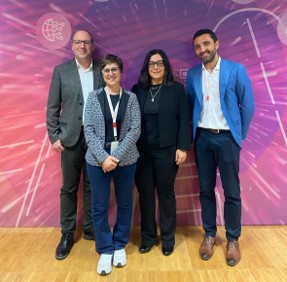
The founding members include prominent academics from the University of Malta, namely Professor Leonard Busuttil, Dr Diane Vassallo, Professor Vanessa Camilleri, and Professor Christian Colombo. Through their combined expertise in education, computer science, and digital learning, they have developed a strong platform for advancing computational thinking education across Malta and Gozo.
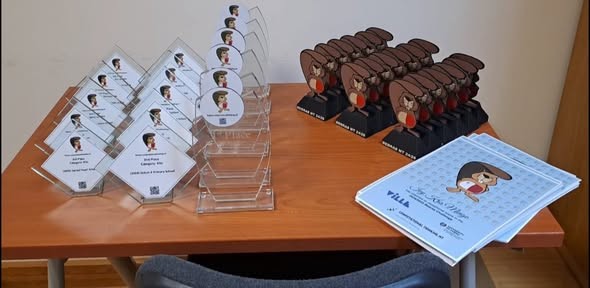
Several core principles guide the organisation. One of its primary goals is to empower young people with problem-solving abilities that will serve them throughout their lives. It also seeks to strengthen digital literacy by helping students develop the skills needed to thrive in an increasingly digital society. Equally important is its commitment to collaboration, bringing together educators, learners, academic institutions, and industry stakeholders to create a supportive community focused on digital learning and innovation.
Current industry sponsors to Computational Thinking Malta include PwC as a gold sponsor, and the Malta Digital Innovation Authority (MDIA) and the Melita Foundation as silver sponsors.
The BEBRAS Challenge itself provides a practical and engaging way to develop computational thinking skills. Students participate online from their schools using computers or mobile devices and are supervised by their teachers, who may also integrate the challenge into broader classroom activities. The smooth delivery of the challenge across schools in Malta is made possible with the support of the Directorate for Digital Literacy and Transversal Skills (DDLTS), whose collaboration is instrumental in coordinating participation and engaging schools nationwide. The challenge is designed to be inclusive and accessible, requiring no prior preparation, specialist training, or programming experience.

Participants are given 45 minutes to complete a series of 15 multiple-choice questions. These tasks focus on logical reasoning, problem-solving, pattern recognition, abstraction, algorithmic thinking, and the ability to break complex problems into smaller, manageable parts. These are the same cognitive skills that underpin computer science and software development, yet they are presented in ways that are engaging and age-appropriate for students.
A major strength of the challenge is its ability to introduce computing concepts without requiring technical knowledge. Students learn to think like problem-solvers rather than simply memorising information. This approach helps demystify technology and encourages young people to view computing as accessible, creative, and relevant to their everyday lives.
The growth of the initiative in Malta demonstrates its increasing popularity and educational value. During the 2024–2025 academic year, the challenge attracted 2,825 participants from schools across Malta and Gozo. Participation increased significantly during the 2025–2026 academic year, reaching 3,499 students—an increase of approximately 24%. The challenge now spans six categories covering learners from Year 2 through Sixth Form, reaching students between the ages of 6 and 19.

This steady growth reflects a growing recognition among educators, schools, and parents of the importance of computational thinking as a foundational twenty-first-century skill. It also highlights the success of Computational Thinking Malta in creating awareness and providing meaningful opportunities for students to engage with digital concepts in a practical and enjoyable way.
Impact in Malta
The impact of the BEBRAS Challenge extends far beyond the competition itself. By introducing thousands of students to computational thinking each year, the initiative is helping to build a stronger foundation for future digital skills development in Malta. Students develop critical thinking, logical reasoning, creativity, and problem-solving abilities that are valuable not only in computing but across all academic disciplines and future careers.
The initiative also supports Malta’s broader efforts to strengthen STEM education and increase interest in technology-related subjects. Early exposure to computational thinking can inspire students to pursue further studies in computer science, artificial intelligence, software engineering, cybersecurity, data science, and other digital fields that are increasingly important to Malta’s economy.
Furthermore, the challenge helps educators integrate computational thinking into teaching practices, creating a multiplier effect that extends beyond the participants themselves and contributes to broader educational innovation. To further support learning and reflection, Computational Thinking Malta has developed a series of video resources, available at https://bebras.computationalthinking.mt , which walk through the reasoning behind selected challenge tasks. These resources offer students and teachers alike the opportunity to revisit problems, understand the thinking strategies involved, and deepen their engagement with computational concepts beyond the challenge itself.
European Relevance and Contribution to the Digital Decade 2030
The BEBRAS Challenge aligns strongly with the objectives of the European Union’s Digital Education Action Plan and the Digital Decade 2030 strategy. One of the central goals of the Digital Decade is to improve digital skills across Europe and ensure that citizens possess the competences needed to participate confidently in the digital society and economy.
Computational thinking is increasingly recognised as a key component of digital competence. By helping young learners develop analytical and problem-solving skills from an early age, the initiative contributes directly to Europe’s ambition of creating a digitally skilled population capable of adapting to technological change.
The initiative also supports broader European priorities related to STEM education, innovation, and future workforce development. As Europe seeks to increase the number of ICT specialists and strengthen its digital competitiveness, programmes that nurture interest in computing from an early age become increasingly important.
Replicability Across Europe
One of the most valuable aspects of the Maltese experience is its simplicity and scalability. The model requires relatively limited resources, can be delivered within existing school structures, and is accessible to students regardless of their prior experience or background.
The collaboration between universities, educators, and a dedicated non-governmental organisation provides a strong framework that can easily be adapted by other countries. Similar partnerships could be established across Europe to promote computational thinking, support teachers, and organise national participation in international challenges.
Because the challenge is free, inclusive, and suitable for a wide age range, it offers a practical and cost-effective approach for Member States seeking to strengthen digital skills development and increase interest in computing among young people.
Conclusion
The BEBRAS Challenge represents an outstanding example of how computational thinking can be introduced to students in an engaging, accessible, and impactful way. Through the efforts of Computational Thinking Malta and its academic partners, thousands of young learners are developing essential skills that will support their educational journeys and future careers.
By promoting logical reasoning, creativity, and problem-solving, the initiative contributes to Malta’s digital transformation ambitions while supporting wider European objectives related to digital skills and innovation. As participation continues to grow, the BEBRAS Challenge demonstrates how early exposure to computational thinking can help build a generation of confident, capable, and digitally empowered citizens prepared for the opportunities and challenges of the future.